


Introduction
XRP is one of the most carefully observed digital currencies in the cryptocurrency market. Ripple Labs invented XRP so that people may send money across borders quickly and cheaply. XRP uses a consensus mechanism using the XRP Ledger instead of the usual proof-of-work method. This makes transactions faster and uses less energy.
When traders do XRP technical analysis, they look at price charts, trading volume, trend strength, and momentum indicators. Bitcoin and Ethereum lead the way for other cryptocurrencies, which have a big effect on XRP’s price.
Important Information About XRP:
• Speed of transactions: 3 to 5 seconds to settle
• Network capacity: about 1,500 transactions every second
• Total supply: 100 billion tokens (already mined)
• Mainly made for payments between countries
Price History and Market Cycles
XRP has gone through several ups and downs since it came out in 2012. XRP rose to an all-time high of about $3.84 during the crypto bubble of 2017–2018. This surge was caused by those who were interested in making money and the fact that more and more people were using cryptocurrencies.
The U.S. Securities and Exchange Commission sued Ripple Labs in 2020, putting regulatory pressure on XRP. This had a big impact on how people felt about the market and how prices were set. From a XRP technical analysis point of view, the lawsuit era caused long periods of consolidation and surges in volatility.
Important Events in History:
• The apex of the 2017 bull run was close to $3.84
• Effect of the SEC lawsuit in 2020
• Multiple consolidation ranging from $0.20 to $1.00
• Strong rebounds amid recoveries in the crypto market as a whole
Patterns in Charts and How Prices Move
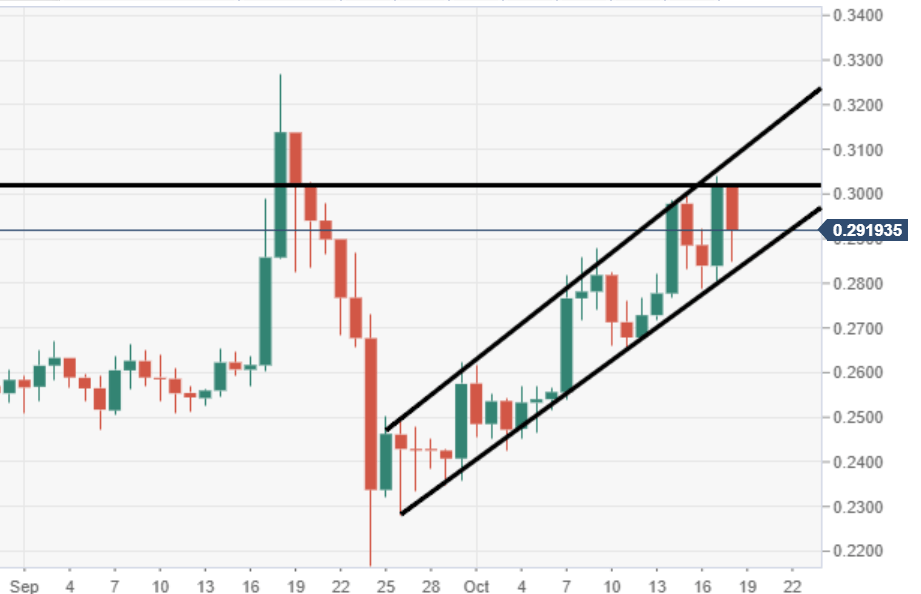
Chart patterns are very important for XRP technical analysis. Traders often look for continuation and reversal patterns in XRP to predict breakouts or changes in the trend. Some common shapes are symmetrical triangles, ascending triangles, double bottoms, and head-and-shoulders patterns.
A breakout above a resistance zone with high volume is frequently an indication that the market will keep going up. On the other hand, breaches below established support levels could cause falls to happen faster. Bullish engulfing patterns and doji candles are examples of candlestick formations that can confirm short-term reversals.
XRP Chart Patterns That Are Common:
• During consolidation, there is a symmetrical triangle
• Double bottom at a strong support level
• Breakout retest strategy close to resistance
• Bull flag patterns in strong uptrends
Important Technical Indicators for XRP Technical Analysis
Traders use technical indicators to confirm trends and the intensity of momentum. When doing XRP technical analysis, people often use oscillators and moving averages to find points to buy and sell.
The Relative Strength Index (RSI) looks at momentum and whether something is overbought or oversold. If the RSI is above 70, it could mean that the market is overbought. If it is below 30, it could mean that the market is oversold.
The Moving Average Convergence Divergence (MACD) keeps an eye on changes in momentum and crossover signals. A bullish crossover usually comes before the price goes up, whereas a bearish crossover may be a sign that the price will go down.
The 50-day and 200-day moving averages show the direction of long-term trends. Golden crosses and death crosses are signs of macro trends.
The Most Common Indicators:
• RSI for strength of momentum
• MACD for signals to cross
• Moving averages for 50 days and 200 days
• Volume profile for areas with a lot of money
Levels of Support and Resistance
Support and resistance zones are very important for XRP technical analysis. These levels are places where the price has historically changed direction or stopped. Traders keep an eye on these areas for signs of breakouts or rejections.
Psychological round figures like $0.50, $1.00, and $2.00 are frequently very strong obstacles. When a lot of people trade, resistance often turns into support.
Key Ideas About Price Behavior:
• Strong support frequently lines up with nodes that have a lot of volume
• Resistance zones put pressure on people to take profits
• Volume confirmation is needed for breakouts
• Retests show that the tendency will continue
Market Sentiment and Outside Factors
The way people feel about the market has a big effect on the price of XRP. Ripple Labs news, clearer regulations, or changes in the global crypto market can all cause quick price changes. XRP usually moves with Bitcoin, although it can move on its own when there is news about XRP.
Large wallet movements and other on-chain activities may show that institutions are interested. Inflows to an exchange can mean that people are selling, while outflows can mean that people are buying.
Drivers of Sentiment:
• Legal news about Ripple Labs
• Trend in the price of Bitcoin
• News about institutional adoption
• Policies for the global economy
Outlook for the Short and Long Term
Short-term XRP technical analysis looks at hourly and daily charts. Traders take advantage of volatility by using momentum indicators and breakout tactics.
Long-term investors look at weekly and monthly charts to figure out which way the macro trend is going. A persistent break above resistance levels that have been there for years could signify the start of a new bullish cycle.
Things to think about in the short term:
• Intraday volatility is more than 5% to 10%
• Scalping while the market is stable
• Watching for RSI divergence
Things to think about in the long term:
• Breakouts of resistance over several years
• Impact of clear rules
• Growth of partnerships between institutions
Strategies for Managing Risk
Because XRP is so volatile, risk management is quite important in XRP technical analysis. Before entering a trade, traders usually set stop-loss orders below support levels and risk-to-reward ratios.
Diversifying your investments lowers the chance of losing money on one asset. You need emotional discipline because news events have a big effect on the crypto markets.
Basics of Risk Management:
• Set a stop-loss below a crucial support level
• Don’t borrow too much money
• Use rules for sizing positions
• Keep an eye on changes in the economy as a whole
Trends in the Future and Adoption
XRP’s long-term potential depends on how widely it is used in payment systems around the world. Ripple Labs is still making more deals with banks and other financial institutions throughout the world. More people using it and clearer laws may make long-term bullish technical patterns stronger.
Breakouts from long periods of consolidation often mean that the market is changing in a big way. As more people start using blockchain, XRP may benefit from more ways to use it in transactions.
Things that help growth:
• How well cross-border payments work
• Adoption of blockchain by institutions
• Clear rules
• Growth of the XRP Ledger ecosystem
Conclusion
XRP technical analysis gives you a way to look at price patterns, changes in momentum, and important market levels in an organized way. Traders may make better decisions by using chart patterns, indicators like RSI and MACD, and good risk management.
XRP is still affected by changes in regulations and the general mood of the crypto world, but its solid use case in cross-border payments and institutional finance makes it relevant for a long time. To deal with its volatility, it’s still important to keep an eye on support and resistance zones, volume confirmation, and macroeconomic trends.
In short, XRP technical analysis shows that it is a dynamic asset that can have big price swings, severe corrections, and long periods of consolidation. Long-term trading success depends on having a focused plan and being mindful of market mood and technical signs.