

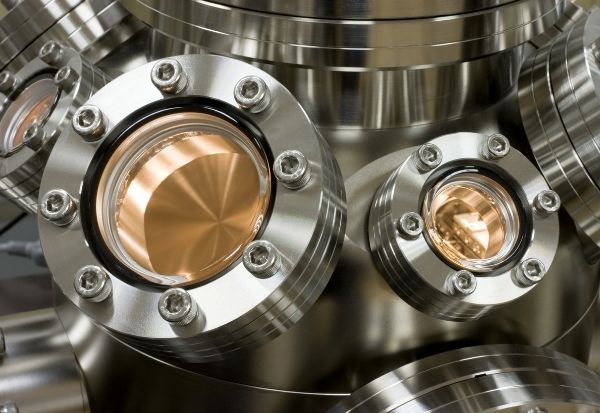

Introduction
What is Vacuum Technology?
Vacuum technology is the field of science and engineering that deals with making, measuring, and keeping places where the pressure is lower than the air pressure. Vacuum technology is the process of taking air or gas molecules out of a sealed environment to make a vacuum.
Vacuum technology is utilized a lot in electronics, healthcare, industrial manufacturing, scientific research, and even space simulation. Vacuum technology is very important in many modern fields, including semiconductor production, food packaging, pharmaceuticals, and aerospace engineering.
What is a Vacuum?
A vacuum is a place where the pressure is much lower than the standard atmospheric pressure, which is 101.325 kPa at sea level. A perfect vacuum has no particles, although this is not feasible in real life.
Different ranges are used to group vacuum levels.
Different Kinds of Vacuum Levels
Vacuum Level Classification Table
| Vacuum Level | Pressure Range (mbar) | Common Uses |
|---|---|---|
| Low Vacuum | 1000 to 1 | Packaging and suction systems |
| Medium Vacuum | 1 to 10⁻³ | Freeze drying, coating |
| High Vacuum | 10⁻³ to 10⁻⁷ | Electron microscopy |
| Ultra-High Vacuum | Below 10⁻⁷ | Particle physics research |
The Basics of Vacuum Technology
The basic idea behind vacuum technology is to use vacuum pumps to remove gas from an enclosed chamber. The pressure inside the chamber is lower when there are fewer gas molecules.
The Three Basic Physical Principles
-
How gas flows
-
Measuring pressure
-
Ways to get rid of gas
The Main Parts of a Vacuum System
A typical vacuum technology system has:
-
Chamber for a vacuum
-
Pump for vacuum
-
Gauges of pressure
-
Valves
-
Gaskets and seals
-
Pipes and connectors
-
Traps and filters
To keep everything running smoothly and stop leaks, each part must be chosen carefully.
Different Kinds of Vacuum Pumps
The most important part of vacuum technology is the vacuum pump. They are used to get rid of air and gases in a system.
Pumps That Work with Machines
-
Pump with a rotary vane
-
Pump with a diaphragm
-
Pump with a piston
These are mostly used for low and medium vacuum.
Pumps for Transferring Momentum
-
Turbomolecular pump
-
Diffusion pump
Used in situations where there is a lot of vacuum.
Pumps for Entrapment
-
Cryopump
-
Ion pump
Utilized in ultra-high vacuum settings.
A Look at Several Vacuum Pumps
Vacuum Pump Comparison Table
| Type of Pump | Level of Vacuum | Pros | Cons |
|---|---|---|---|
| Rotary Vane Pump | Low to Medium | Cheap and reliable | Oil contamination |
| Turbomolecular Pump | High Vacuum | Clean operation | Expensive |
| Diffusion Pump | High Vacuum | High pumping speed | Needs cooling |
| Cryopump | Ultra-High | No oil, clean | Expensive |
Uses of Vacuum Technology
Many businesses employ vacuum technology a lot. Here are some important uses:
The Semiconductor Industry
-
Used to make chips and put down thin films.
Packaging Food
-
Takes out oxygen to make the shelf life longer.
The Medical Field
-
Used in equipment for suction and sterilizing.
The Aerospace Industry
-
Simulates the conditions of space for testing.
Metalworking
-
Processes for melting in a vacuum and treating with heat.
Labs for Research
-
Used in microscopes and particle accelerators.
The Pharmaceutical Industry
-
Freeze drying (lyophilization).
Benefits of Vacuum Technology
-
Lessens oxidation
-
Keeps things clean
-
Makes products better
-
Improves the characteristics of materials
-
Extends shelf life
-
Allows for more advanced scientific tests
Tools for Measuring Vacuum
In vacuum technology, it is very important to measure pressure accurately.
Some Common Tools
-
Pirani gauge
-
Thermocouple meter
-
Ionization meter
-
Capacitance manometer
Each gauge works better at certain pressure levels.
Finding Leaks in Vacuum Systems
Leaks are a big problem with vacuum technology systems.
Ways to Find Leaks
-
Finding helium leaks
-
Method of pressure decay
-
Testing with bubbles
-
Testing with a mass spectrometer
Sealing and maintenance that are done right keep performance from going down.
Things That Go Into Vacuum Systems
Materials need to be able to handle low pressure and stop gas from escaping.
Some Common Materials
-
Steel that doesn’t rust
-
Aluminum
-
Glass
-
Copper
-
Seals made of elastomers (Viton, Buna-N)
The choice of material has a direct effect on how well a vacuum works.
Flow Regimes in Vacuum Technology
Gas flow changes when pressure drops.
-
Flow that is thick
-
Flow that changes
-
Flow of molecules
It’s crucial to know about these regimes when making vacuum technology systems.
Things to Think About for Safety
If you don’t know how to use them, vacuum systems can be dangerous.
Things to Do to Stay Safe
-
Seal it correctly
-
Stay away from the hazards of implosion
-
Check the pressure often
-
Wear safety glasses
-
Make sure you handle pump oil correctly
How to Take Care of Your System
Regular maintenance makes systems last longer.
-
Look for leaks
-
Change out worn seals
-
Change the oil in the pump
-
Clean filters
-
Set the gauges
What Will Happen Next in Vacuum Technology
New ideas are always coming up that improve vacuum technology.
New Trends
-
Vacuum systems that don’t use oil
-
Pumps that use less energy
-
Smart systems for keeping an eye on things
-
Small vacuum units
-
Advanced uses for space research
More and more businesses are using automation in vacuum technology to be more accurate and efficient.
A Brief Summary of the Main Points
-
Vacuum means an area with little pressure.
-
Vacuum technology gets rid of gasses.
-
Used in electronics and packaging.
-
Pumps are essential parts.
-
There are several levels of vacuum.
-
Measurement is very important.
-
Finding leaks is really important.
-
Maintenance keeps things running smoothly.
Frequently Asked Questions (FAQ)
What is the purpose of vacuum technology?
Vacuum technology is employed in the aerospace testing, medical equipment, food packaging, and semiconductor production industries.
What is the difference between a low and a high vacuum?
Low vacuum has more gas molecules than high vacuum, which has relatively few.
Is it possible to make a perfect vacuum?
No, it is technically impossible to create a perfect vacuum in real life.
What kind of pump works best for high vacuum?
For high vacuum systems, turbomolecular and diffusion pumps are often employed.
What makes leak detection so important?
Leaks make systems less efficient and can hurt important processes.
Does vacuum technology cost a lot?
The price depends on the type of system and how it will be used. Big industrial systems might cost a lot of money, but small ones are cheap.
Conclusion
Vacuum technology is an important aspect of modern science and industry. Vacuum technology makes sure that everything are accurate, clean, and efficient, from semiconductor chips to sterilizing medical equipment. Vacuum technology is still growing into new fields thanks to improvements in oil-free systems, energy-saving designs, and sophisticated controls.
Vacuum technology will continue to be a key part of advancement and innovation as businesses need more accuracy and cleaner workplaces.