


Introduction
Industrial processes rely on accurate control of liquids, gases, steam, and other media to maintain safe and efficient operations. Valves play an essential role in regulating and isolating these flows, but manually operating valves can become difficult when systems contain numerous valves, remote pipelines, or equipment located in challenging environments. This is where Electric Valve Actuators become valuable. These devices use electrical power to operate valves automatically or remotely, allowing industrial operators to control flow without relying on continuous manual intervention. They are commonly used in water treatment, power generation, manufacturing, chemical processing, HVAC, and many other industries.
As industrial facilities increasingly adopt automation, the demand for reliable valve-control technologies continues to grow. Electric actuation can provide accurate positioning, repeatable operation, and convenient integration with control systems. Depending on the application, actuators can be configured for simple open-and-close functions or more precise modulation. Understanding how these actuators work, their major components, applications, advantages, and selection considerations can help engineers and facility managers choose suitable equipment for their process requirements.
What Are Electric Valve Actuators?
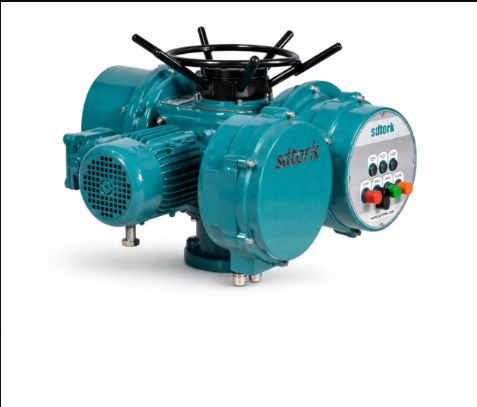
Electric Valve Actuators are mechanical devices that use an electric motor to move and control an industrial valve. When an electrical signal is received, the actuator converts the motor’s rotational movement into the mechanical force required to open, close, or position the connected valve. Depending on the actuator and valve configuration, this movement can involve rotary or linear motion.
These actuators can be operated through local controls, remote commands, programmable controllers, or automated process-management systems. Some are designed for simple two-position operation, while others provide precise intermediate positioning. Feedback systems can also indicate the valve’s current position, helping operators monitor and control the process more effectively. Their ability to connect physical valve movement with electronic control systems makes electric actuation an important part of modern industrial automation.
How Electric Valve Actuators Work
The basic operating principle involves an electric motor, gearing mechanism, and output drive. When the actuator receives a control signal, the motor starts rotating. A gearbox converts the motor’s speed into the torque or force needed to move the valve. The actuator then continues moving until it reaches the desired position or receives a signal to stop.
Limit switches, position sensors, or electronic controls can be used to determine when the valve has reached its required position. More advanced units may include programmable settings, diagnostic functions, overload protection, and communication capabilities. This allows the actuator to do more than simply move a valve; it can become part of an integrated control system that provides operators with information about valve position and operating conditions.
Main Components of an Electric Actuator
Several components work together to provide reliable actuator operation. The electric motor supplies the driving power, while the gearbox converts motor speed into suitable output torque. The output shaft or drive mechanism transfers this force to the valve.
Control electronics manage signals and determine how the actuator responds to commands. Limit switches or position sensors can help identify open, closed, or intermediate positions. Depending on the design, an actuator may also include manual override mechanisms, torque protection, local control switches, indicators, and communication interfaces.
The enclosure is another important component because it protects internal electronics and mechanical parts from environmental conditions. For outdoor or demanding industrial installations, the enclosure rating may be selected according to exposure to dust, moisture, chemicals, or other hazards.
Types of Electric Valve Actuators
Electric actuators are available in different designs based on valve movement and application requirements. Rotary actuators are commonly used with valves such as butterfly, ball, and plug valves. These actuators rotate the valve stem through a defined angle to change the valve position.
Linear electric actuators are used where the valve requires straight-line movement. They may be suitable for certain control valves and specialized industrial applications. Actuators can also be categorized according to their operating mode. On-off actuators are designed for basic opening and closing, while modulating actuators can position the valve at various points between fully open and fully closed.
The correct type depends on valve design, required torque or thrust, operating frequency, speed, control accuracy, and environmental conditions.
Applications in Industrial Facilities
Electric Valve Actuators are used in numerous industrial environments because they provide convenient and repeatable valve operation. Water treatment plants use them to control water flow through treatment, filtration, pumping, and distribution systems. Power plants can use electric actuation for cooling water, steam-related systems, fuel handling, and auxiliary processes.
Chemical processing facilities may use automated valves to manage process fluids and improve control over complex production stages. Manufacturing plants can integrate actuated valves into production lines, compressed-air systems, and utility networks. They are also used in building HVAC systems where automated control of heating and cooling fluids is required. The broad range of applications demonstrates the flexibility of electric actuation technology.
Benefits of Electric Valve Actuators
One of the main benefits of electric actuation is automation. Operators can control valves from a central location rather than manually accessing every valve. This is especially useful when valves are installed in large plants, elevated areas, underground facilities, or locations where frequent access would be inconvenient.
Electric actuators can also provide repeatable movement. When properly configured, they can move a valve to predetermined positions with consistent results. This supports process control and can help reduce variations caused by manual operation. Integration with programmable control systems also makes it possible to coordinate valve movement with pumps, sensors, alarms, and other equipment.
Precision and Flow Control
Certain industrial processes require more than simple open-or-close operation. They may need valves to remain at specific intermediate positions to regulate flow, pressure, temperature, or process conditions. Modulating electric actuators can provide this capability by responding to control signals and adjusting valve position.
The actuator’s positioning accuracy depends on its design, feedback system, valve characteristics, and control configuration. When properly matched, the combination can provide smooth and responsive control. Electric Valve Actuators can therefore contribute to process stability in applications where accurate flow management is important.
Integration With Industrial Automation
Modern industrial facilities often use programmable logic controllers, distributed control systems, building-management systems, and other automation platforms. Electric actuators can be integrated with these systems through appropriate control signals and communication interfaces.
This integration allows operators to issue commands, monitor valve positions, receive alarms, and collect operating information. Advanced actuators may support digital communication protocols that enable additional diagnostic and configuration features. Connecting valve operation to a centralized automation system can improve visibility and make it easier to coordinate multiple process components.
Safety Features and Protection
Safety is an important consideration when selecting valve actuation equipment. Electric actuators can include several protective features designed to prevent mechanical or electrical damage. Overload protection can help prevent the motor from continuing to operate when excessive resistance is encountered.
Limit switches can stop movement when the valve reaches a specified position. Thermal protection may help protect the motor from excessive heat, while enclosure protection can reduce the effects of environmental exposure. Some applications may also require emergency operating arrangements or backup power considerations.
The appropriate safety features depend on the process and installation environment. Critical applications should be engineered according to relevant technical requirements and site-specific safety procedures.
Environmental Considerations
The installation environment can significantly affect actuator selection. Indoor equipment may face relatively controlled conditions, while outdoor installations can be exposed to rain, dust, humidity, temperature fluctuations, and sunlight. Industrial facilities may also have corrosive atmospheres or areas with specific electrical requirements.
Actuator enclosures should therefore be selected according to the environmental conditions expected at the installation site. Material selection, sealing, protection ratings, and temperature ranges should all be reviewed before installation. In specialized environments, additional protection may be necessary to maintain reliable operation over time.
Selecting the Right Electric Valve Actuator
Choosing the correct actuator begins with understanding the valve itself. Engineers need to determine the valve type, size, operating torque or thrust, travel requirements, and operating frequency. The actuator must provide sufficient force to operate the valve under the expected process conditions.
Electrical characteristics are also important. Voltage, frequency, power requirements, control signals, and available electrical infrastructure should be evaluated. Environmental conditions, installation location, desired operating speed, and communication requirements should also be considered.
For modulating applications, positioning accuracy and feedback capabilities become particularly important. For on-off applications, reliable end-position control and appropriate torque protection may receive greater emphasis. Proper actuator sizing helps prevent premature wear and supports consistent operation.
Maintenance Requirements
Although electric actuators can reduce the need for manual valve operation, they still require appropriate maintenance. Routine inspections can identify issues involving electrical connections, enclosure condition, mechanical components, seals, and valve movement.
Maintenance schedules should consider the operating environment and frequency of use. Dust, moisture, vibration, and temperature variations can affect equipment over time. The connected valve should also be inspected because actuator performance depends on the valve moving correctly.
Keeping operating records can help maintenance teams identify changes in performance. Unusual noise, increased operating time, inconsistent positioning, or repeated overload events may indicate a problem requiring investigation.
Energy Efficiency and Operational Performance
Electric actuation can support efficient operation by allowing valves to be controlled according to actual process requirements. Automated control can prevent valves from remaining unnecessarily open or closed and can coordinate flow with other equipment.
Energy consumption varies according to actuator size, motor characteristics, operating frequency, and process requirements. In many applications, the actuator operates only during valve movement rather than continuously. Proper sizing and control strategy can therefore contribute to efficient system operation while providing the required level of automation.
Electric Versus Manual Valve Operation
Manual valves can be practical for simple systems where valves are easy to access and do not require frequent adjustment. However, manual operation becomes less convenient as systems grow larger or more complex. Operators may need to travel considerable distances between valves, and repeated adjustments can consume time.
Electric actuation provides remote and automated control, making it particularly useful for systems where frequent or coordinated valve movement is required. It can also provide position feedback and integration with centralized control systems. The appropriate solution ultimately depends on application requirements, installation conditions, operating frequency, and automation objectives.
Future Trends in Electric Actuation
The development of industrial automation is influencing the evolution of electric valve technology. Modern actuators are increasingly incorporating digital communication, condition monitoring, programmable control, and diagnostic capabilities. These functions can provide operators with more information about equipment performance.
Smart actuator technology may also support predictive maintenance by identifying unusual operating conditions before they result in significant equipment problems. Improved electronics and communication systems can make integration with industrial networks easier. As facilities pursue greater automation and operational visibility, Electric Valve Actuators are likely to become increasingly connected components within broader process-control systems.
Conclusion
Electric valve actuation provides an effective way to automate the operation of industrial valves and improve control over process systems. Electric Valve Actuators convert electrical energy into controlled mechanical movement, allowing valves to be operated locally, remotely, or automatically through industrial control systems. Their applications range from water treatment and power generation to chemical processing, manufacturing, and HVAC.
Selecting the right actuator requires careful evaluation of valve requirements, torque or thrust, operating frequency, electrical characteristics, environmental conditions, control method, and safety features. Proper installation and maintenance are equally important for achieving reliable performance. As industrial facilities continue adopting automation, digital monitoring, and intelligent control technologies, electric actuators can play an increasingly important role in creating responsive, efficient, and manageable valve-control systems.