


Introduction
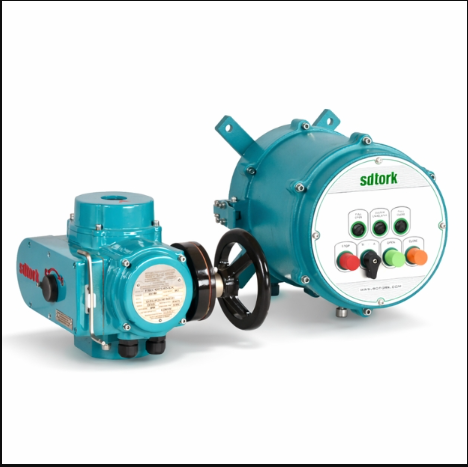
An Electric Actuator for Damper Valve is an electromechanical device designed to operate industrial dampers by converting electrical energy into controlled mechanical movement. Damper valves are commonly used to regulate or isolate the movement of air, gases, fumes, and other process media through ducts and industrial systems. When an electric actuator is connected to a damper, the system can provide controlled opening, closing, or positioning without requiring continuous manual operation. This makes electric actuation useful in modern industrial facilities where automation, accurate positioning, and reliable operation are important.
Industrial plants often contain extensive ventilation, exhaust, combustion, and process-gas networks. Manually operating dampers in these systems can be inconvenient, particularly when equipment is installed in difficult-to-access locations. An electric actuator allows damper operation from a local panel or centralized control system. Depending on the design, it can also provide position feedback, limit control, torque protection, and other functions that support automated process management.
What Is an Electric Actuator for Damper Valve?
An Electric Actuator for Damper Valve combines an electric motor, gear mechanism, control electronics, and output arrangement to move a damper between required positions. The motor produces rotational force, while the internal gearing transfers that force to the damper shaft. Depending on the damper design, the actuator may rotate the shaft through a specified angle to open, close, or position the damper.
The actuator can be designed for simple two-position operation or modulating applications. In two-position operation, the damper generally moves between open and closed positions. Modulating systems allow the damper to stop at intermediate positions according to a control signal. This makes the equipment suitable for applications where airflow or gas movement must be adjusted continuously rather than simply switched on or off.
How Does an Electric Damper Actuator Work?
The operating process begins when an electrical command is sent to the actuator. This command can come from a local switch, control panel, programmable logic controller, building automation system, or industrial control system. The actuator’s control circuit activates the motor in the appropriate direction.
As the motor rotates, the gearbox generates the required output torque and moves the damper shaft. Internal or external position controls can determine when the actuator reaches the required open or closed position. In modulating applications, the actuator can respond to a proportional control signal and adjust the damper position according to the process requirement. This provides more precise control than a basic manual mechanism.
Main Components of an Electric Actuator
An electric actuator generally contains several important components working together. The electric motor supplies the driving force, while gears convert motor speed into suitable output torque. The output shaft or coupling connects the actuator to the damper shaft.
Control electronics manage the motor and interpret operating commands. Limit switches or position sensors can indicate when the damper has reached a specified position. Some advanced models may include torque sensing, thermal protection, digital displays, communication interfaces, and diagnostic functions. The enclosure protects internal components from environmental conditions, although the required protection level depends on where the actuator will be installed.
Types of Electric Actuators for Dampers
Electric actuators can be classified according to operating method, torque capacity, control system, and application requirements. On-off actuators are designed for applications where the damper needs to move between defined open and closed positions. They are commonly used for basic isolation and ventilation control.
Modulating actuators are designed for applications requiring intermediate damper positions. They can receive suitable control signals and continuously adjust the damper position. Spring-return models can provide an additional safety function in selected applications by returning the damper to a predetermined position when power is interrupted. Multi-turn or specialized actuators may also be used where the damper mechanism requires greater rotation or a particular operating arrangement.
Applications in Industrial Ventilation
Industrial ventilation systems depend on dampers to control the movement of air through ducts and equipment. These systems can be found in manufacturing facilities, warehouses, processing plants, workshops, and large commercial buildings. Electric actuation makes it possible to operate dampers from centralized or automated control systems.
In a large ventilation network, several dampers may need to operate according to a predetermined sequence. Electric actuators can help coordinate these movements. For example, a control system may adjust multiple dampers to balance airflow between different areas. Automated operation can also reduce the need for personnel to manually access individual dampers located at elevated or difficult-to-reach positions.
Use in Power Plants
Power plants contain extensive ducting and gas-handling systems where dampers are used for combustion air, exhaust gas, ventilation, and other process functions. These applications can involve high temperatures, dust, vibration, and demanding operating cycles. The actuator must therefore be selected according to the actual environmental and mechanical conditions.
An appropriately sized electric actuator can provide reliable damper movement while allowing operators to monitor and control the equipment. Position feedback can be particularly useful because operators may need confirmation that a damper has reached its intended position. For automated power-generation systems, actuator compatibility with the plant’s control architecture is also an important consideration.
Applications in Cement and Steel Plants
Cement and steel manufacturing facilities often operate large process systems involving dust, hot gases, combustion air, and exhaust streams. Dampers may be installed around kilns, furnaces, dust collectors, fans, mills, and other equipment. These environments can place significant demands on mechanical and electrical components.
When an actuator is used in such applications, engineers need to consider temperature, dust exposure, vibration, torque requirements, and operating frequency. Protective enclosures and suitable mounting arrangements can help protect the actuator. Proper damper sizing is also essential because an actuator that cannot generate sufficient torque may struggle to move the blade or shaft reliably.
Oil, Gas and Chemical Applications
Oil, gas, and chemical processing facilities use automated equipment to manage gases, vapors, ventilation, and process flows. Damper systems may be used in ventilation networks, combustion systems, exhaust arrangements, and specialized process equipment.
The actuator selected for these environments must be compatible with the surrounding conditions. Temperature, humidity, corrosive substances, hazardous-area requirements, and control-system compatibility may all influence the specification. In applications where safety and process isolation are important, engineers should carefully evaluate the required fail position, enclosure protection, actuator duty, and available backup arrangements.
Benefits of Electric Actuation
One of the main advantages of electric actuation is automation. Operators can control damper movement without physically accessing the equipment. This is particularly useful when dampers are located at heights, inside large industrial facilities, or in areas where regular manual access is inconvenient.
Electric actuators can also provide repeatable movement. Once the actuator and damper are correctly configured, the system can consistently move the damper to defined positions. Depending on the actuator model, position feedback and diagnostic functions can provide additional information to the control system. Reduced manual intervention can also make it easier to coordinate several dampers within a larger process.
Selecting the Correct Actuator
Selecting an actuator requires a detailed assessment of the damper and its operating environment. Torque is one of the most important factors. The actuator must generate enough torque to overcome friction, pressure forces, seal resistance, and other mechanical loads associated with the damper.
Operating speed should also be considered. Some applications require rapid movement, while others need slower and more controlled positioning. Engineers should evaluate power supply, duty cycle, ambient temperature, enclosure protection, control signal, mounting arrangement, and required rotation angle. The actuator should be correctly matched to the damper rather than selected solely according to physical dimensions.
Importance of Torque and Sizing
Incorrect actuator sizing can affect the reliability of the entire damper system. An undersized actuator may fail to move the damper under actual operating conditions. Repeated operation under excessive load can also increase motor temperature and mechanical wear.
An oversized actuator may provide unnecessary capacity and can increase equipment and installation costs. Proper sizing should therefore be based on actual damper torque requirements. Factors such as blade size, shaft arrangement, airflow, pressure difference, seal friction, temperature, and deposits should be considered. For critical industrial applications, engineering calculations and manufacturer recommendations can help establish the appropriate actuator rating.
Installation and Commissioning
Correct installation ensures that the actuator can operate the damper smoothly. The actuator should be aligned properly with the damper shaft, and the coupling should be securely fitted. Mechanical misalignment can increase resistance and cause unnecessary stress on the actuator.
Electrical connections should be completed according to the equipment specifications. Before commissioning, technicians can verify rotation direction, open and closed limits, control signals, feedback functions, and emergency or fail-position requirements where applicable. The damper should move through its complete operating range without obstruction. Testing under suitable operating conditions can confirm that the actuator responds correctly to the control system.
Maintenance Requirements
Regular maintenance helps maintain reliable actuator performance. Inspection requirements depend on the operating environment, frequency of use, and importance of the damper within the process. Dust, moisture, vibration, corrosion, and high temperatures can affect actuator performance over time.
Maintenance personnel should inspect mechanical connections, couplings, wiring, seals, limit switches, and mounting components as appropriate. Unusual sounds, slow movement, inconsistent positioning, or excessive motor heating can indicate potential problems. The damper itself should also be inspected because mechanical resistance within the damper can place additional loads on the actuator.
Role in Modern Automation Systems
Modern industrial plants increasingly connect field equipment with centralized automation platforms. An Electric Actuator for Damper Valve can serve as an important interface between the physical damper and the plant control system. Through suitable control signals and feedback devices, operators can monitor damper position and manage operation remotely.
Advanced actuators may also provide diagnostic information and communication capabilities. These features can help maintenance teams understand equipment status and identify abnormal operating conditions. Integration should be planned carefully to ensure that the actuator’s electrical and communication interfaces are compatible with the plant’s existing control architecture.
Future Trends in Electric Damper Actuation
Electric actuation technology is continuing to develop alongside industrial automation. Newer systems increasingly emphasize energy efficiency, compact designs, improved diagnostics, digital communication, and more accurate position control. These developments can make automated damper systems easier to integrate into modern facilities.
Smart monitoring is also becoming more relevant. Actuators with sensors and communication capabilities can provide information about position, operating cycles, faults, and other conditions. This information may support preventive maintenance and improve process visibility. Nevertheless, reliable mechanical construction and correct actuator sizing will remain essential because electronic intelligence cannot compensate for an improperly designed mechanical system.
Conclusion
An Electric Actuator for Damper Valve provides an effective way to automate the opening, closing, and positioning of industrial dampers. By combining an electric motor with suitable gearing, control components, and feedback systems, it can support reliable operation across ventilation, power generation, cement, steel, chemical, oil and gas, and other industrial applications.
Choosing the correct actuator requires careful attention to torque, speed, damper dimensions, operating environment, control method, power supply, and duty cycle. Proper installation, commissioning, and maintenance are equally important for long-term performance. As industrial facilities continue adopting automated and connected systems, electric damper actuation can remain an important part of efficient and controlled industrial operations.